

In most Indian homes, the sofa is where life happens. It hosts family, guests, and snacking, so fabric cannot be an afterthought. The best sofa fabric is the one that stays comfortable in your weather, looks good, and does not punish you for small spills. Choose the best sofa material now, and you worry less about stains, fading, and an “old sofa” feel.
Why Does Choosing the Right Sofa Fabric Material Matter?
A sofa’s fabric affects comfort, cleaning effort, and how the piece ages over time.
- Comfort in heat and AC: breathability, warmth, and surface feel
- Cleaning: stain lift, drying time, and odour holding
- Wear: rubbing, pilling, snagging, and loose threads
- Looks: colour fading, shine, and dust visibility
What Are the Most Common Types of Sofa Fabric Materials Available?
Most sofas in India use either natural fibres, synthetic fibres, or coated surfaces. Each sofa fabric material has a different feel, cleaning needs, and performance in heat, humidity, and daily use.
Leather
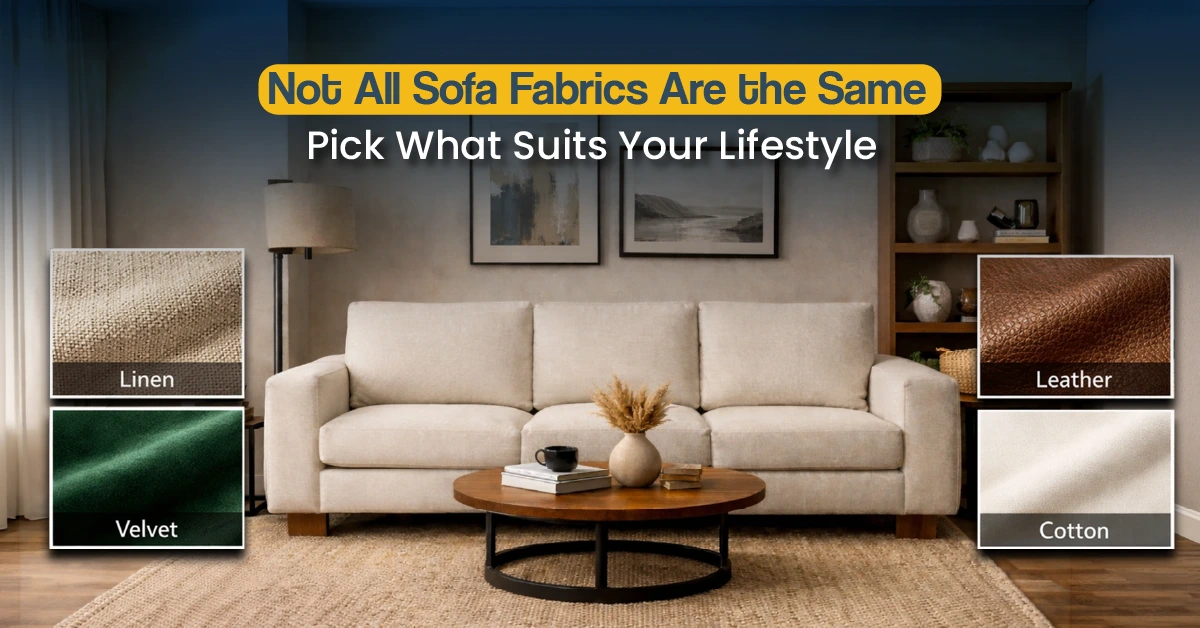
Leather looks premium and is easy to wipe, making it ideal for dust-prone homes. It can feel warm or slightly sticky in peak summer, so it is better suited to air-conditioned rooms or homes with lighter daily use.
Linen
Linen feels light and breathable, which makes it comfortable in warmer months. It creases easily and needs quick stain treatment because spills can set in faster on lighter shades.
Cotton
Cotton is soft and comfortable for long sitting hours, especially in hot weather. It absorbs liquid quickly, so it works best when you are prepared to blot spills immediately and use a fabric protector.
Wool
Wool feels warm and cosy, so it suits cooler cities and air-conditioned living rooms. It is usually seen in blends and requires gentle cleaning to avoid fibre damage.
Suede
Suede has a smooth, matte finish that makes a sofa look plush and inviting. It is sensitive to water marks and oil stains, so it is a better choice for low-spill homes.
Velvet
Velvet offers rich colour and a high-end look, especially in jewel tones. It attracts dust and can show pressure marks, so regular vacuuming and light brushing keep it looking neat.
Chenille
Chenille feels soft and textured, which makes it comfortable for everyday lounging. It can snag with rough use, so a tighter weave is a safer choice if the sofa will be used heavily.
Polyester
Polyester is common because it handles daily wear well and is generally easy to maintain. In humid weather, it can feel warmer than cotton, so it is best in tighter weaves with a smoother finish.
Nylon
Nylon is usually blended with other fibres to add strength and reduce wear. It performs well on high-use sofas, but it does not feel as breathable as cotton in hotter months.
Vinyl
Vinyl is a coated surface that wipes clean quickly, which helps in homes with children and frequent spills. It feels less breathable, and it can show ageing over time if exposed to heat and heavy friction.
Acrylic
Acrylic holds colour well and stays bright even in well-lit rooms. It can pill in looser constructions, so you should choose a tighter weave and avoid excessive rubbing.Olefin
Olefin is known for its stain resistance and moisture handling, making it suitable for monsoon months and humid cities. It is a sensible option for busy homes because routine cleaning is usually straightforward.
Hemp
Hemp is a natural fibre with a textured, earthy look that suits minimal interiors. It can feel coarse unless blended, so testing a swatch at home helps you decide if the feel works for you.
Also Read: Difference Between Sofa and Couch?
Which Sofa Fabric Is Best for Different Climate Conditions?
Your city’s weather changes how a fabric behaves. In humid regions, olefin and polyester blends are easier because they dry faster after cleaning. In dry, hot cities, cotton and cotton-linen blends feel cooler, but protect them from direct sun. In cooler climates, chenille, wool blends, and velvet feel warmer.
What Is the best sofa fabric for Different Lifestyles?
Your routine is the best filter. Choose the fabric that matches how you actually live.
- Kids at home: tight weaves, stain resistance, and mid-tone colours
- Pets: avoid loose weaves; pick textures that hide hair and marks
- Frequent hosting: wipe-friendly surfaces or easy-clean synthetics
- Daily lounging: blends that stay soft and handle regular cleaning
How Do You Compare the Best Sofa Fabrics Based on Key Factors?
Use swatches like test samples. Check these before you decide.
- Weave tightness: tighter weaves snag less and collect less dust
- Abrasion performance: higher ratings handle daily sitting better
- Colourfastness: essential near windows and balcony doors
- Cleaning instructions: water-safe versus solvent-only cleaning
- Heat and grip: sit briefly and note warmth, stickiness, or slipping
Which sofa fabric material Is Best for Apartments and Small Homes?
In apartments, the sofa often doubles as a work seat and a casual dining spot. Fabrics that hold odours can feel uncomfortable.
- Strong picks: polyester blends, olefin, leather, and vinyl
- Use with care: delicate linen, light suede, and plush velvet
Removable cushion covers make washing and replacement easier.
Also Read: Modern Sofa Design Guide: Top Styles, Materials & Space-Saving Ideas
What Are the Pros and Cons of Popular Sofa Fabric Materials?
Most decisions come down to comfort versus maintenance, so set expectations early.
- Natural fibres feel breathable, but stains and fading need attention
- Synthetics clean easily, but some weaves can feel warmer
- Coated surfaces wipe clean, but breathability is lower in hot months
How Can You Choose the Best Sofa Fabric for Your Home?
Start with use. If the sofa is your main seat, prioritise easy cleaning and a tight weave. If it is a formal sofa, you can choose richer textures that need more care.
Then match the room conditions.
- Strong sunlight: prioritise colourfast fabrics and use curtains
- High humidity: avoid fabrics that stay damp after spot cleaning
- Allergies: tighter weaves and wipeable surfaces feel cleaner
Finally, confirm details before you buy. Take swatches home, view them in your lighting, and ask about warranty coverage and cleaning codes. If you want a balanced, low-stress choice, aim for the best sofa material that you can maintain weekly, not the one that only looks good on day one.
