
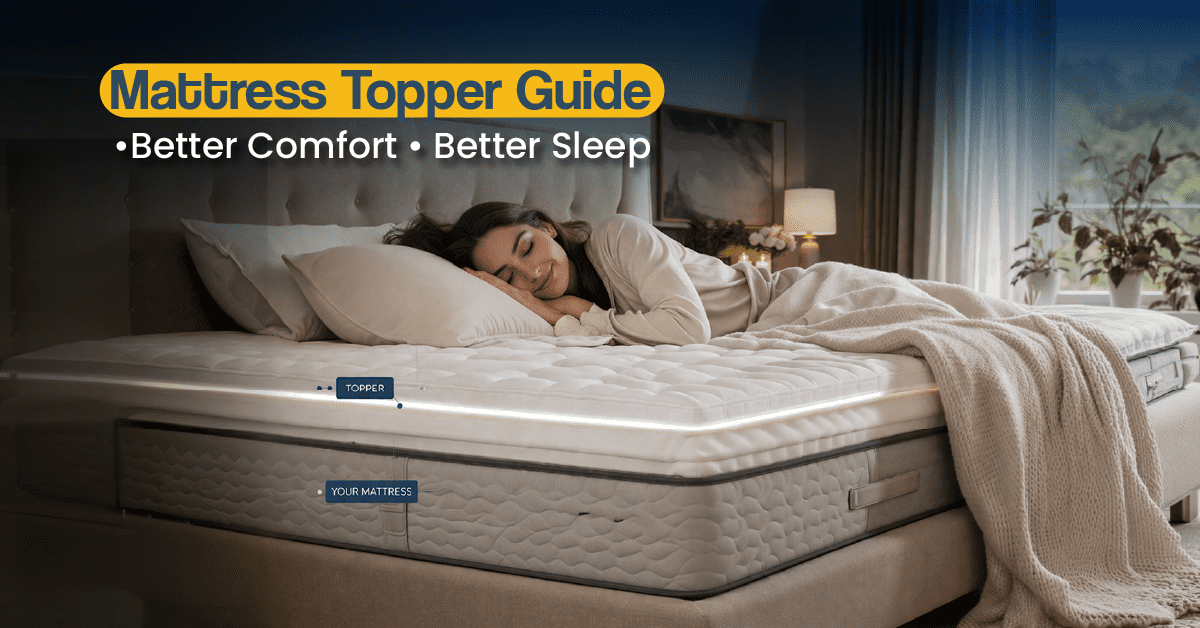

A mattress topper can refresh how your bed feels without the expense of a new mattress. If your mattress is supportive but uncomfortable, a topper can improve comfort and help you sleep better in everyday Indian conditions, from humid summers to monsoon moisture.
What Is A Mattress Topper?
A mattress topper is a removable layer placed on top of your mattress, under the bedsheet. It is thicker than a protector and is made to change the mattress feel through added cushioning or support. Most toppers come in standard Indian bed sizes.
What Is a Mattress Topper Used For?
If you are asking what a mattress topper iused for, it is mainly to adjust comfort and support quickly:
- soften a hard mattress or add a little firmness to a slightly worn one
- ease pressure on shoulders and hips, especially for side sleepers
- upgrade guest beds and rentals without replacing the mattress
- add a fresher surface when your mattress feels “rough” but supportive
If your mattress is visibly sagging or you feel a deep dip near the hips, a topper can improve comfort, but it will not restore missing support.
Benefits of Mattress Topper for Sleep Comfort
The core benefit of mattress topper is better pressure distribution, which can make you feel less stiff in the morning. It can also reduce partner disturbance and offer cooler, more breathable options depending on the material.
Common benefits include:
- improved surface comfort without changing the bed frame
- better sleep stability for couples when using foam-based toppers
- a cleaner sleep layer when paired with a washable cover and protector
- flexibility to adjust firmness as your needs change over time
Types of Mattress Toppers Based on Material and Feel
When you look at types of mattress toppers, match the material to your preferred feel and how warm you sleep. These are the popular choices available across India. As a guide, 2 to 5 cm suits small comfort tweaks, while 5 to 7.5 cm creates a more noticeable change.
Memory Foam Toppers
Memory foam moulds to your body and supports pressure points, which can feel soothing for the shoulders, hips, and lower back. It can also retain heat, so it works best with breathable bedding and regular airing, especially in humid weather.
Synthetic Latex Toppers
Synthetic latex feels springy and responsive, so you get cushioning without a deep sink. Since quality can vary across brands, it is worth checking the density, warranty, and return terms before you buy.
Natural Latex Toppers
Natural latex offers a buoyant, supportive feel and usually sleeps cooler than memory foam. It gives you gentle contouring, but it does not hug the body as closely, which many sleepers prefer for easier movement in bed.
Feather and Down Toppers
Feather and down toppers feel soft and plush, which is ideal if your mattress already provides good support. They need regular fluffing to maintain loft, and they may not suit you if you prefer a stable, structured surface.
Wool Toppers
Wool toppers feel breathable and help manage moisture, which can be useful during monsoon months. They add gentle cushioning rather than a thick sink, so they are a good option if you want comfort without changing firmness too much.
Gel-Infused Memory Foam Toppers
Gel-infused memory foam aims to offer the same contouring comfort with a slightly cooler feel. You will get better results when you pair it with cotton sheets, good room airflow, and consistent airing.
Cotton and Fibrefill Toppers
Cotton and fibrefill toppers provide light cushioning and are often easier to live with for day-to-day use. They suit you best when you want mild comfort improvement on a budget, rather than a big change in support.
What Is the Best Mattress Topper for Back Pain?
Aim for neutral spine alignment, not extra softness. Medium-firm latex or denser memory foam (often 5 to 7.5 cm) can support the lower back while easing pressure points. If you sleep on your stomach, avoid very soft toppers that let your hips sink. Persistent pain should be discussed with a clinician or physiotherapist.
Also Read: How to Choose the Best Mattress for Lower Back Issues and Spinal Support
Mattress Pad vs Mattress Topper: What’s the Difference?
A pad is usually thin and used mainly for protection and light cushioning. A topper is thicker and is designed to noticeably change comfort or support.
How to Choose the Right Mattress Topper for Your Sleep Needs
Start with your sleep position, then choose thickness and firmness.
- Side sleeper: memory foam or soft latex, 5 to 7.5 cm.
- Back sleeper: medium latex or firmer foam, around 5 cm.
- Hot sleeper: latex or wool, or gel foam with a breathable cover.
If your mattress feels only slightly firm, a thinner topper may be enough. If you want pressure relief, pick a thicker option with a breathable cover, and use a protector to manage sweat and spills.
Most toppers last about 2 to 5 years; latex often lasts longer than fibrefill. Using a protector and rotating it can extend comfort.
Yes, some foams can retain heat in humid weather. Improve airflow, use cotton bedsheets, and consider latex or wool if you sleep hot.
Spot-clean spills immediately and air it out every few months. For how to clean a mattress topper, follow the care label: covers may be machine-washed, while foam usually needs gentle spot-cleaning and thorough drying.
It can change surface comfort a lot, but it cannot fix deep sagging or broken support layers.
