
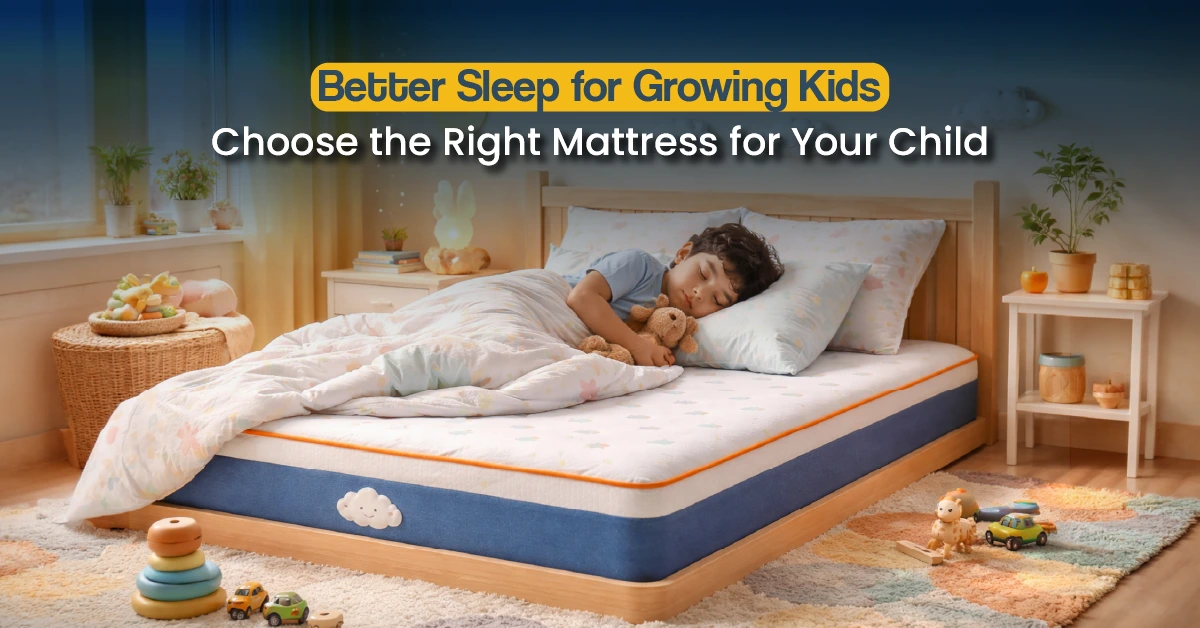

A children’s mattress should do three things well: keep the spine supported, stay breathable through the night, and handle spills and sweat. When you choose with growth and hygiene in mind, sleep tends to settle, mornings feel easier, and you avoid upgrades. If you are wondering which mattress is good for kids, start with age, room size, and your child’s sleep habits, then match them to the right build.
Why Children Need a Different Mattress Than Adults
Children are lighter and still developing posture, so they need steady, even support rather than deep sink.
- Growing-body support: A flatter surface helps maintain healthy alignment, as seen in firmer builds like the Beddy Nest Baby Mattress.
- Heat control: Breathable layers reduce sweating, especially in Indian summers.
- Easy hygiene: Washable covers and protectors matter for spills and allergies.
- Safer feel: Stable edges and low odour are important for smaller sleepers.
Best Mattress for Kids – Key Features to Look For
The best mattress for kids balances support, comfort, and low-maintenance care.
- Medium-firm support: Holds the back level without feeling hard, similar to what you find in kids-focused options like the Beddy Blossom Kids Mattress
- Quick response: The surface should bounce back when your child turns.
- Breathable outer fabric: Cotton or knitted covers help airflow.
- Wash-friendly set-up: Removable covers or a waterproof protector simplify cleaning.
- Pick a breathable waterproof protector so spills stay out, and airflow stays.
- Low chemical odour: Strong smell that lingers can signal poor materials or storage.
- Solid edges: Useful when children sit on the side to read or chat.
- Clear trial and warranty: Helps you judge comfort and long-term value.
Types of Children’s Mattresses
Pick the type that matches heat, feel, and how long you want the mattress to keep its shape.
- High-resilience foam: Supportive, light to move, and usually budget-friendly.
- Latex: Springy and airy, often preferred for warmer sleepers.
- Pocket spring: Good airflow and pushback for older kids and teens.
- Hybrid: A mix of foam and springs when you want both support and comfort.
- Memory foam (choose carefully): Can feel warm and slow to respond for active sleepers.
- Coir blend: Very firm; choose only if your child likes a hard feel and the surface is even.
Also Read: How to Choose the Right Mattress in India: Types & Buying Guide
Choosing Mattress Based on Child’s Age
Use age as a guide, but always consider height, weight, and medical needs as advised by your doctor.
- Toddlers (2 to 5): Firm, flat surface with breathable, easy-clean protection such as the Beddy Protector Baby Mattress.
- Kids (6 to 12): Medium-firm support with stronger edges and better airflow.
- Teens (13+): Spring or hybrid support to suit higher body weight and longer use.
- Shared use: Choose a sturdier build if siblings or sleepovers are common.
What Mattress Firmness is Best for Children?
Medium-firm works for most children because it supports posture and stays comfortable as they grow.
- Side-sleep check: The neck and back should look straight, not curved.
- No deep dips: Hips should not sink more than shoulders.
- Comfort tweak: If it feels slightly firm, add a breathable topper instead of going softer.
Children’s Mattress Size Guide for Indian Homes
Measure the bed frame and keep your child’s growth in mind for the next few years.
- Toddler bed: 60 x 30 inch (approx.) for small rooms and early years.
- Standard single: 72 x 30 or 72 x 36 inch for most kids’ rooms.
- Longer single: 75 or 78 x 36 inch for tall kids and teens.
- Queen sharing: 72 x 60 inch for occasional co-sleeping.
Leave enough walking space so changing bedsheets and daily movement stay easy. If you buy a custom size, confirm the thickness fits your bed.
Also Read: Mattress Thickness Guide – How Thick Should Your Mattress Be?
Safety Standards for Children’s Mattresses in India
Safety is about verified materials and sound construction, not marketing terms.
- Ask for test details: Reputed brands share information on foam, fabric, and adhesives.
- Look for an ISI mark where applicable: Some components may show BIS certification; check the licence number if shown.
- Check for low-odour builds: The brand should explain what backs the claim.
- Inspect finishing: Neat stitching, covered zips, and no exposed foam reduce hazards.
- Use a proper base: Flat plywood or correctly spaced slats prevent sagging and uneven support.
Conclusion
A well-chosen children’s mattress supports healthy sleep today and stays dependable as your child grows. Focus on medium-firm support, breathable materials, and an easy-clean set-up, then pick a size that suits both your room and your child’s height. If you are comparing options for the best mattress for kids , do a quick at-home feel test and choose brands that are transparent about their materials and testing.
FAQs
What type of mattress is best for children?
Most children do well on responsive foam, latex, or pocket springs with medium-firm support. Choose latex or springs if overheating is a concern, and choose foam if you want lighter handling and simpler budgets.
Is memory foam safe for kids?
It can be, but it is not ideal for every child. If your child sleeps hot or changes position often, a more responsive foam, latex, or spring mattress is usually a better fit.
How firm should a child’s mattress be?
Medium-firm is a safe starting point. Your child should feel supported with no deep sinking, and they should not wake up with aches or stiffness.
Do kids need special mattresses?
They need age-appropriate support and hygiene features more than a “special” label. A quality children’s mattress is typically breathable, supportive, and easy to keep clean.
What size mattress is best for kids?
A single is the common pick, but height and room size decide. If you want to upgrade less often, consider a longer single early on.
How often should a child’s mattress be replaced?
Replace it if it sags, feels uneven, or starts causing discomfort. Many families reassess around 5 to 7 years, or sooner if your child outgrows the length.
