

Summary
A mattress is not something most Indian homes replace often. You expect it to support your back through humid summers, monsoons, winter mornings, guests, children, and years of everyday use. That is why understanding mattress lifespan matters before buying. The simple answer to which type of mattress lasts longest is natural latex, followed by high-density foam and well-made hybrid mattresses. But durability also depends on material quality, body weight, climate, bed base, and maintenance.
Why Mattress Lifespan Matters Before You Buy
A mattress that loses shape early quietly affects posture. You may not notice it in one night, but over months the body starts compensating for uneven support. A cheaper mattress can become expensive if it needs replacement sooner.
For Indian buyers, climate makes durability important. Humidity can encourage smell, mould, and rust in poor materials. Heat can make some foams feel softer. A longer-lasting mattress keeps support steadier and gives better value.
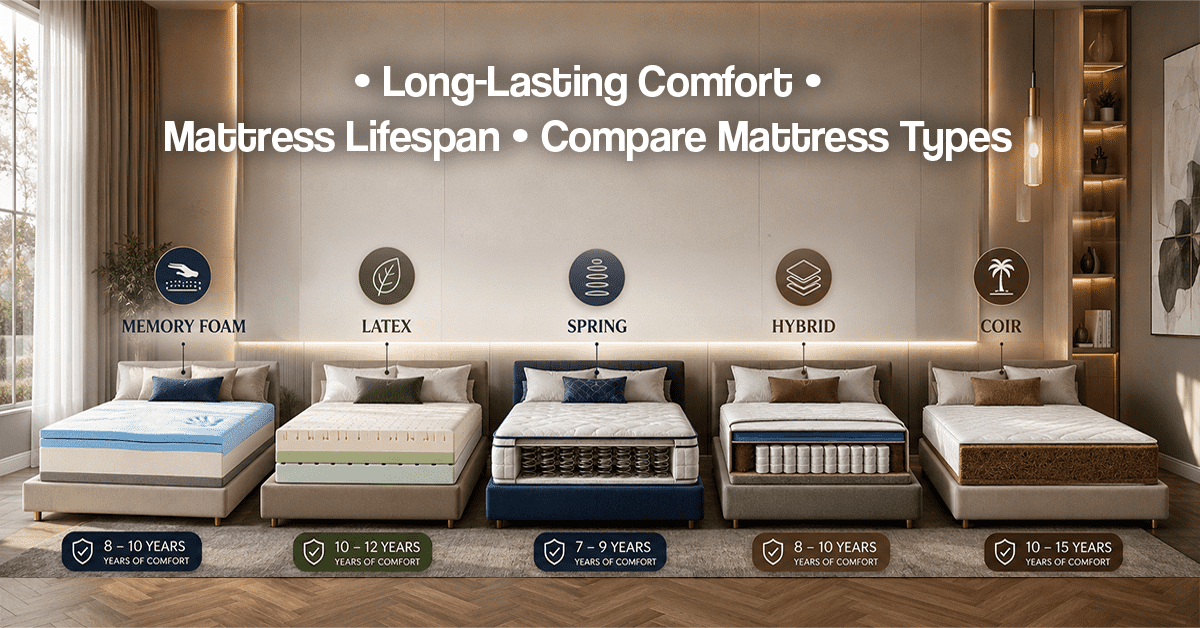
Average Mattress Lifespan by Mattress Type
| Mattress Type | Expected Lifespan | Durability Driver | Indian Climate Risk | Best For |
|---|---|---|---|---|
| Natural Latex | 15-25 years | Elastic rubber resists impressions | Low; breathable | Long-term buyers, hot sleepers |
| High-Density PU Foam | 10-15 years | Dense cells slow sagging | Medium; moisture risk | Back support, heavier users |
| Memory Foam | 7-10 years | Layer thickness and base density | Medium-high; heat retention | Side sleepers, pressure relief |
| Pocket Spring Hybrid | 8-12 years | Independent coils support weight | Medium; top foam wears first | Couples, mixed sleepers |
| Bonnell Spring | 5-7 years | Linked coils spread pressure unevenly | High; rust risk | Short-term budget use |
| Coir / Natural Fibre | 5-8 years | Fibres flatten at pressure points | High; absorbs moisture | Traditional firm-bed preference |
Which Type of Mattress Lasts the Longest?
Natural latex usually has the longest working life because it behaves differently from ordinary foam. It compresses, rebounds, and resists deep impressions when quality is good. This is why sleep consultants name latex when asked what type of mattress lasts the longest. Still, nobody buys a material alone. You buy a surface that must suit your body.
- For long-term use, latex is the safest pick. The Centuary Sleepables Natural Latex Mattress uses breathable natural latex foam, a 3D air mesh border, and anti-sag support, useful in warm cities such as Hyderabad, Chennai, Mumbai, and Kochi.
- For people who switch between soft and firm, reversible foam is sensible. The Centuary Dual Comfort Foam Mattress offers two comfort sides, so it can be turned by preference and wear can spread more evenly.
- For back support, memory foam should not feel like a soft sink. The Centuary Sleepables Ortho Memory Mattress combines contour foam with airflow-focused construction, giving a semi-firm feel.
- For couples, a pocket spring hybrid is worth considering. The Centuary Sleepables Hybrid Pocket Spring Mattress pairs pocketed springs with memory foam, so movement is controlled better than in basic spring beds.
So, which type of mattress lasts longest? Natural latex. But if you need bounce, pressure relief, or a reversible feel, good foam and hybrid options can still give dependable years.
What Factors Affect Mattress Lifespan?
Durability is not magic hidden inside a label. It comes from visible choices.
- Material quality: Dense foam and natural latex resist sagging better than low-density foam or loose fibre.
- Body weight: More pressure at the hips and shoulders can shorten comfort life.
- Bed base: Bent plywood, uneven boards, or wide slat gaps can damage even a good mattress.
- Climate: Damp rooms increase odour, mould, and spring corrosion risk.
- Usage: A guest-room mattress lasts longer than one used nightly.
- Maintenance: Rotation, airing, and a protector help the surface stay even.
Also Read:- Mattress Types and How to Choose Mattresses in India
How to Make Your Mattress Last Longer
Begin with the bed frame. A mattress placed on an uneven base will start ageing from below. Use a firm, flat platform, especially for foam, latex, and hybrid mattresses.
In humid months, air the room whenever possible. If you use a box bed, open the storage compartment sometimes so moisture does not sit under the mattress. A breathable protector is worth using because sweat, spills, and dust affect freshness.
Rotate the mattress every three to six months if the brand allows it. Do not fold thick foam or latex. Avoid sitting on the same edge daily. Small habits protect mattress lifespan better than any emergency fix later.
Why Centuary Mattresses Are Built for Long-Term Comfort
Centuary’s range matches how Indian families shop. Some want latex for durability. Some want reversible comfort. Some need an ortho feel for back support. Others prefer a hybrid because two people share the bed.
Features such as breathable borders, anti-sag layers, antimicrobial treatment, removable covers, and vacuum-packed delivery solve everyday problems rather than sounding decorative. They help with heat, hygiene, handling, and support. That does not mean every mattress suits every sleeper, but it makes comparison easier.
Also Read:- Mattress Topper Guide: Types Uses & Benefits for Better Sleep
Conclusion
If durability is your top priority, natural latex is the clear winner. High-density foam and well-built hybrid mattresses can also last well when matched with the right body type, base, and climate. Coir and basic spring mattresses may feel familiar, but they show wear earlier in humid Indian conditions.
Before buying, spend less time on the first five-minute showroom feel and more time checking layers, density, ventilation, support system, warranty terms, and care instructions. A good mattress should not only feel comfortable on day one. It should keep sleep steady through summers, monsoons, and ordinary nights.
FAQs
Does mattress firmness affect how long a mattress lasts?
Yes. Very soft mattresses may form impressions faster. Medium-firm options often balance comfort and support.
Can using a box bed reduce the lifespan of a mattress?
It can if ventilation is poor. Storage beds trap moisture, so regular airing helps.
Is a heavier mattress always more durable?
No. Weight can suggest density, but material quality and support matter more.
Does climate affect mattress durability?
Yes. Humidity can cause odour, mould, and rust. Breathable materials help.
Do premium mattresses always last longer than budget mattresses?
Not always. Premium helps only with better density, latex quality, or springs.
Is warranty length the same as mattress lifespan?
No. Warranty covers the listed defects. Lifespan means usable comfort and support.
How can I check if my mattress has lost its support?
Look for sagging, lumps, noisy springs, edge collapse, stiffness, or better sleep away from home.
Are hybrid mattresses more durable than memory foam mattresses?
A good hybrid can last longer because coils add structure, but the top foam still decides comfort.
Can a mattress protector really extend mattress lifespan?
Yes. It keeps sweat, spills, dust, and stains away from the inner layers.
