

Summary
A sagging mattress can ruin sleep. Soon, you may wake stiff or sore. In Indian homes, the issue is often linked to box beds, old plywood bases, wooden cots and humid rooms. This guide explains how to fix a sagging mattress, why it happens, and how to prevent it from affecting daily comfort.
What Is a Sagging Mattress?
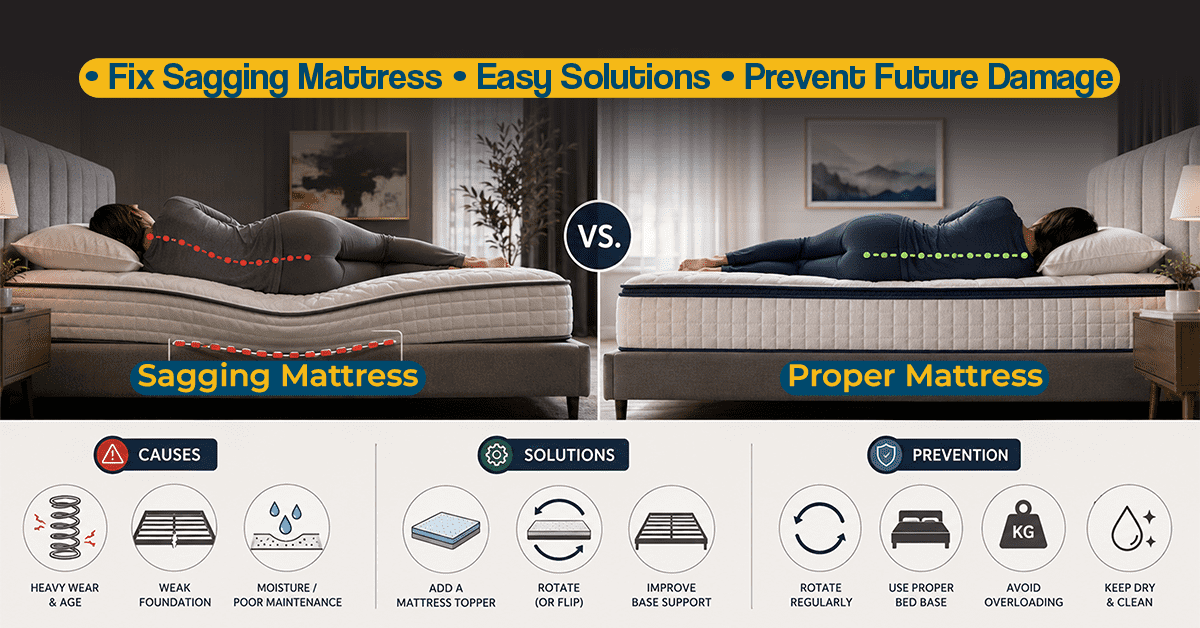
A sagging mattress has a hollow or uneven patch where the body usually rests. It commonly appears around the hip, shoulder or lower-back area. This is different from normal softening, where the mattress gradually feels less firm but still stays level.
Sagging becomes a problem because your spine no longer rests in a neutral position. You may roll towards the middle, keep changing sides, or feel better after sleeping on a different bed. Couples often notice it sooner because one side may dip more.
What Causes a Mattress to Sag?
Sagging happens over time. The main causes include:
- Sleeping in the same spot every night without rotating the mattress.
- Placing it on broken slats, curved plywood or an uneven cot.
- Choosing a mattress that is too soft for your body weight.
- Sitting on the same edge every day.
- Folding, bending or dragging it during shifting.
- Moisture build-up during the monsoon or in closed rooms.
- Natural wear after years of use.
A well-made mattress can dip if the support below it has gaps, bends or loose joints.
How to Fix a Sagging Mattress
If the dip is mild, try a few sensible fixes before replacing the mattress.
Rotate the mattress
Turn the mattress 180 degrees so the head side becomes the foot side. This spreads pressure to a less-used area. Do this every three to six months, or follow the care label.
Check the bed base
Lift the mattress and inspect the cot. Tighten loose screws, replace cracked slats and check whether the plywood has curved. A firm, flat board can give temporary support.
Use a mattress topper
A topper can soften the feel of a shallow dip and make the surface more comfortable. Choose a supportive topper, not an overly plush one, because excess softness may increase sinking.
Also Read:- Mattress Topper Guide: Types Uses & Benefits for Better Sleep
Add temporary support
For a small hollow, placing firm support below the dipped area may help for a short period. This can work in rented flats when replacement is not immediate.
Review the warranty
If the sag is deep and the mattress is under warranty, measure the depression. Brands usually mention the minimum sag depth covered.
The practical truth about how to fix a sagging mattress is this: surface-level dips can be managed, but a damaged core usually needs replacement.
How to Prevent Mattress Sagging
Prevention starts with the bed base. Keep the mattress on a firm, even and dry surface. If your bed has storage, open it occasionally so trapped moisture can escape. During humid months, keep the room ventilated.
Rotate the mattress as advised. Avoid jumping on it, standing on it, or sitting on the same edge every day. Use a breathable protector to guard against sweat, spills and dust. Choose firmness according to body weight and sleep posture.
Signs It’s Time to Replace Your Mattress
Some mattresses cannot be saved. Replacement may be better if:
- The dip is visible even when the bed is empty.
- Back pain reduces when you sleep elsewhere.
- You roll towards the centre or one side.
- Springs make noise, edges collapse, or foam feels lumpy.
- The mattress smells musty despite cleaning.
- You wake up tired after a full night’s sleep.
If support has failed, continuing with it may cost you more in poor sleep and body discomfort.
Choosing a Durable Mattress That Resists Sagging
A durable mattress is built with stable support layers, not just extra thickness. Look for good foam density, responsive latex, strong pocket springs, breathable fabric and edge support. Side sleepers need cushioning at the shoulders and hips. Back sleepers often prefer medium-firm support. Heavier sleepers may need a stronger core.
Also, check the frame size. A queen mattress on an uneven or undersized cot will not perform well. Measure your bed, correct the base and let a vacuum-packed mattress expand fully before use.
Also Read:- Mattress Warranty Terms in India: What You Should Know Before You Buy
Why Centuary Mattresses Are Designed for Long-Lasting Support
Centuary has different mattress types for different sleep styles, climates and comfort preferences. The choice should come from understanding the construction, not picking the thickest model.
Natural latex for bounce and airflow
The Centuary Sleepables Natural Latex Mattress uses 100% natural, breathable latex foam. Latex gives a responsive feel, helping the body stay supported without feeling stuck. Its ergo-soft foam technology, Xbounce Hi-Rez Foam with Anti Sag technology and 3D Air Mesh border support airflow and shape retention.
Reversible comfort for changing needs
The Centuary Dual Comfort Foam Mattress has two usable sides, one softer and one firmer. This is practical when comfort preferences change with season, body ache or sleeping style.
Semi-firm support for the back
The Centuary Sleepables Ortho Memory Mattress has three layers, contour foam and Intelligent Airflow technology. Its semi-firm feel can suit sleepers who want back support without a hard surface. Centuary Protect anti-microbial treatment also helps in Indian conditions.
Hybrid comfort with support
The Centuary Sleepables Hybrid Pocket Spring Mattress combines pocketed springs with memory foam. The springs offer independent support, while Copper Gel Memory Foam helps with temperature regulation and surface hygiene.
Conclusion
A sagging mattress can disturb posture, comfort and sleep quality. Start with rotation, base correction and moisture control. If the dip is small, a topper or temporary support may help. If the core has collapsed, replacement is wiser. Once you understand how to fix a sagging mattress, you can choose your next mattress confidently.
FAQs
Does sleeping in the same position every night cause a mattress to sag?
Yes. Repeated pressure in one area can compress the layers faster, especially near the hips and shoulders.
Can seasonal weather changes affect mattress shape?
Humidity can affect foam feel and moisture levels. Ventilation, occasional airing and a breathable protector help.
Will flipping my mattress fix sagging?
Only if it is designed to be flipped. Many modern mattresses are one-sided, so rotate instead.
How can I measure whether my mattress has excessive sagging?
Place a straight rod across the mattress and measure the deepest gap with a ruler.
Is mattress sagging more common in foam or spring mattresses?
Both can sag. Foam softens, and springs can lose tension. Base support also decides durability.
Are premium mattresses less likely to sag than budget mattresses?
Usually, because they often use stronger materials. Still, even a premium mattress needs care.
