

Summary
Setting up a crib feels special, but the mattress needs equal attention. Your baby will spend many early months on it. In Indian homes, where space, weather, and cleaning habits differ, the right mattress is about fit, firmness, and safety. This guide explains crib mattress size and buying tips simply.
What Is a Crib Mattress?
A crib mattress is a firm, flat mattress made for a baby crib or cot. It is not a smaller adult mattress. Babies need steady support because their body control is still developing. A good mattress stays level, holds its shape, takes a fitted sheet, and does not leave gaps.
Standard Crib Mattress Dimensions Explained
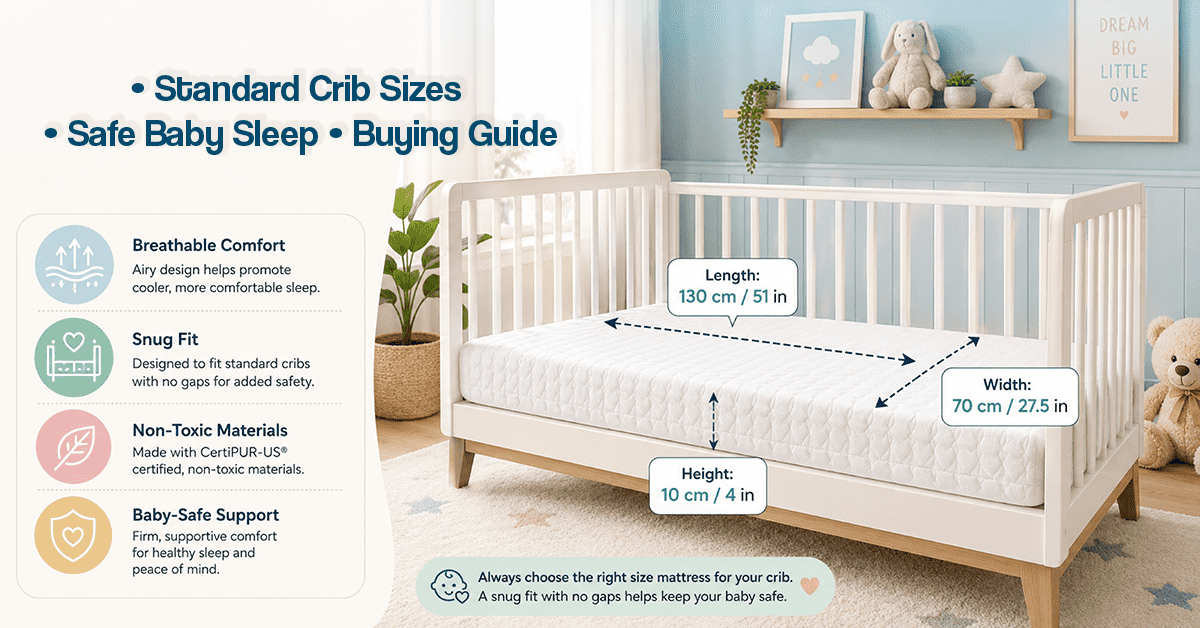
A standard crib mattress is usually around 28 inches wide and 52 inches long, or about 71 cm by 132 cm. Brands vary slightly, especially imported or custom cribs. Many baby mattresses are up to 6 inches thick, but follow the crib maker’s advice. Always compare the label with the crib’s inner measurements.
Why Mattress Size Matters for Infant Safety
A small mattress can leave side gaps. A large mattress may bend or sit unevenly. Both can affect safe sleep. Babies sleep best on a firm, flat surface with a fitted sheet. Keep pillows, blankets, quilts, and soft toys out. When the fit is correct, the mattress stays stable, and the crib is easier to manage.
Crib Mattress Size vs Crib Dimensions
Crib dimensions mean the inner space of the frame. Mattress size means the actual length, width, and thickness of the mattress. Measure the crib from inside edge to inside edge. Then check whether the mattress lies flat without pressing hard against the rails or leaving visible side gaps.
Standard vs Mini Crib Mattress Sizes
A standard crib is larger, easier to match with sheets, and usually works for longer. A mini crib helps in compact flats beside the parents’ bed. However, mini crib sizes vary more. Before buying sheets, confirm the exact infant mattress size mentioned by the brand.
How to Choose the Right Crib Mattress
Choosing becomes easier when you go step by step instead of depending on looks, discounts, or broad age labels. Keep the crib manual and tape measure ready.
Measure Before You Browse
Check these details first:
- Inner length of the crib
- Inner width of the crib
- Allowed mattress thickness
- Corner shape, especially for custom cribs
If a product lists crib-size mattress dimensions, match them with your numbers, not with a rough guess.
Press Test for Firmness
Press your palm on the mattress. It should feel firm and return to shape quickly. If it sinks deeply or leaves a mark, it is too soft for infant sleep. Adults may like plush beds, but babies need a flatter, firmer surface.
Think About Indian Weather
Heat, humidity, and monsoon dampness can make mattresses smell stale. Look for breathable construction, a washable cover, and waterproof protection. Air the mattress in shade whenever needed, especially after spills or long humid days.
Check Materials Without Getting Carried Away
Foam, coir, and hybrid designs can work when the mattress is firm and neatly finished. The Centuary Beddy Blossom Crib Mattress , for instance, uses high-density profiled PU foam with rubberised coir. It has a soft cotton cover and a waterproof cover, useful during spills. Since it can be customised, it may help with non-standard cribs. Still, check the fit carefully.
Keep Maintenance Realistic
Babies create mess. Choose a mattress you can lift, wipe, cover, and air without trouble. A practical mattress often serves better than one with fancy claims.
Safety Features to Look for in a Crib Mattress
A safe crib mattress should have:
- A firm, flat sleeping surface
- Snug fit on all sides
- Strong edges
- Skin-friendly outer fabric
- Washable or removable cover
- Waterproof protection
- No strong chemical smell
- No attached pillow, wedge, bumper, or quilted add-on
Simple is safer. Decorative bedding can wait.
Other Factors to Consider Before Buying
Look beyond the product photo. Check whether fitted sheets are available in the same size. See if the mattress is light enough for sheet changes. Read the return policy, warranty, and cleaning instructions. For sensitive skin, choose a breathable cover. In humid cities, drying time matters. Keep the setup simple.
Common Mistakes Parents Make When Choosing a Crib Mattress
Many parents buy the mattress before measuring the crib. Some choose an extra-soft mattress because it feels premium. Others reuse an old one without checking for sagging, mould, stains, or torn seams. Another common mistake is assuming every mini crib takes the same mattress. Measure, compare, press-test, and inspect before use.
Also Read:- Complete Guide to Choosing the Best Mattress for Your Child
Crib Mattress Care and Maintenance Tips
Use a fitted sheet that does not wrinkle or pull loose. Wash sheets often, especially in summer. Wipe spills quickly and let the mattress dry fully. Air it in a clean, shaded spot. Avoid strong perfumes or harsh disinfectants on the sleeping surface. Replace it if it sags, smells musty, feels lumpy, or no longer fits snugly.
Conclusion
The right crib mattress is not about buying the most expensive option. It is about choosing the right size, firmness, material, and cover for your baby and routine. Measure carefully, keep the crib clear, and choose something easy to maintain. A well-fitted mattress supports calmer care and safer sleep.
FAQ
What is the standard crib mattress size?
The standard crib mattress size is usually around 28 inches by 52 inches, though slight differences are possible. Always check your crib’s inner size.
How much space should there be between the crib and mattress?
There should be very little space. You should not fit more than two fingers between the mattress and crib side.
Are all crib mattresses the same size?
No. Standard crib mattresses are more consistent, but mini cribs, imported cribs, and customised cots may need different sizes.
What is the difference between a standard and mini crib mattress?
A standard mattress is larger and suits longer use. A mini crib mattress is smaller for limited bedroom space.
How thick should an infant mattress be?
Most infant crib mattresses are up to 6 inches thick. Follow the crib maker’s guidance for rail safety.
Can I use a toddler mattress in a crib?
Only if it fits perfectly, stays firm, and is suitable for infant sleep. Check dual-sided labels carefully.
How do I measure my crib for the right mattress size?
Measure the inside length and width, then compare them with the mattress’s stated dimensions.
When should I replace a crib mattress?
Replace it if you notice sagging, lumps, mould, a damp smell, damaged seams, or unsafe gaps.
