
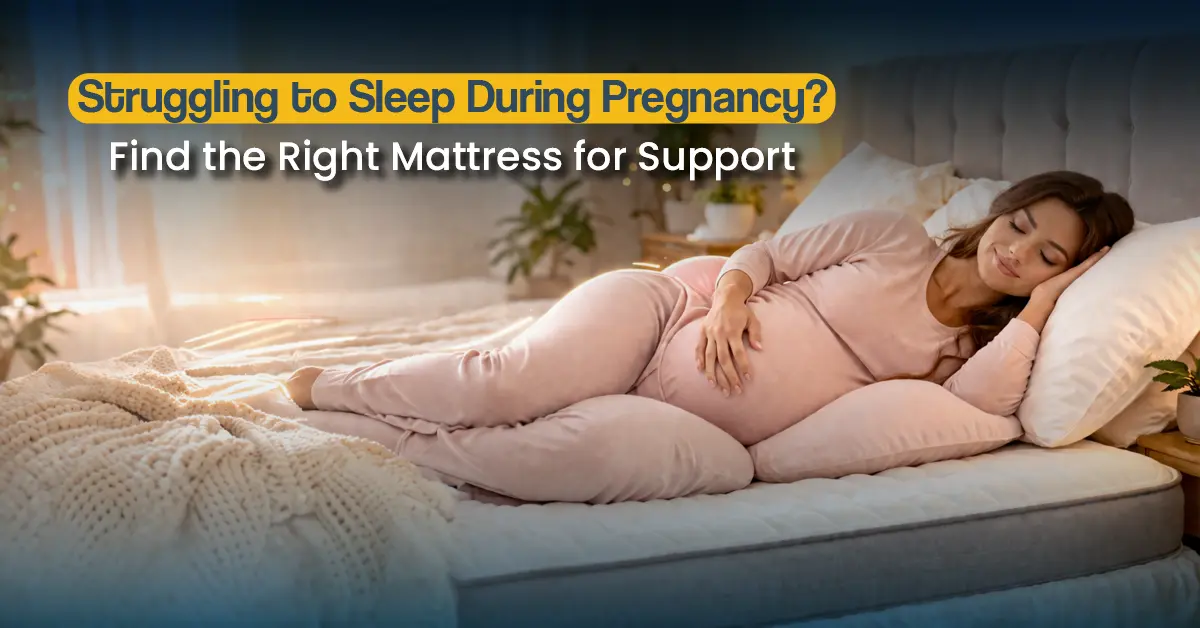

Pregnancy changes how you sleep, how your body carries weight, and how quickly you overheat at night. If your bed feels too soft or worn out, the discomfort shows up as frequent wake-ups and morning stiffness. A well-chosen pregnancy mattress keeps you supported without feeling hard, so side-sleeping feels easier, and rest comes more naturally.
Why Your Mattress Matters More During Pregnancy
As your baby bump grows, side-sleeping becomes the safest, most common position, and your posture shifts day by day. That makes alignment, pressure relief, and temperature control far more important than they were earlier.
- Better alignment can reduce stress on the lower back and hips.
- Pressure relief supports shoulders and knees in side-sleeping.
- Reduced motion transfer helps if your partner moves or gets up early.
- A cooler surface helps you fall back asleep after bathroom trips.
What to Look for in a Pregnancy Mattress
You do not need a complicated build, but you do need the right balance of support and comfort. When choosing a mattress for pregnant women, focus on how it feels under your hips, waist, and shoulders.
- Firmness: medium-firm suits most people because it prevents deep sinking but still cushions.
- Support core: high-density foam, latex, or pocket springs that keep the hips from dipping.
- Comfort layer: a gentle top that eases pressure without trapping you in the bed.
- Edge support: useful when sitting on the side to stand up steadily.
- Breathability: ventilated foam, latex pinholes, or pocket springs for airflow in warm rooms.
- Trial and warranty: helpful because comfort needs can change across trimesters.
Best Mattress Types for Pregnant Women
The best material depends on your sleep position, body weight, and how warm you feel at night. If you want the best mattress when pregnant, shortlist by comfort feel first, then check the build quality.
- Memory foam: strong pressure relief and motion isolation. Pick a responsive, medium-firm option so turning is easier.
- Latex: springy and airy, so you feel supported on top of the bed rather than sunk in.
- Hybrid: comfort layers over pocket springs, giving support plus airflow, ideal for many couples.
- Pocket spring: cooler than solid foam and supportive, especially with a good comfort layer.
Also Read:-Must-Have Pregnancy Essentials
Mattress Types to Avoid During Pregnancy
Extremes in feel often create new aches, especially when you sleep mostly on your side. Avoid any mattress that has already lost its shape.
- Very soft mattresses that sag under the hips, causing the spine to misalign.
- Very firm, thin surfaces that press on the shoulders and hips.
- Old mattresses with visible dips, lumps, or creaking springs.
- Low-quality foam with a strong, lingering smell or that compresses quickly.
Mattress Size Recommendations for Pregnant Women
Space becomes more valuable as you add pillows and change positions through the night. Pick the largest size your room can comfortably fit, especially if you share the bed.
- Queen: works for many couples and fits most Indian bedrooms.
- King: ideal if you use a long body pillow or prefer extra personal space.
- Single or double: can feel restrictive in later months with side-sleeping support pillows.
If you cannot upgrade size, use a pillow between your knees and a small cushion under the belly for steadier support.
When Should You Buy a New Mattress During Pregnancy?
There is no perfect week to buy, but there are clear signs your bed is holding you back. If you wake with pain, struggle to roll over, or sleep better elsewhere, it is worth upgrading.
- Early second trimester is common because side-sleeping becomes more consistent.
- Buy sooner if your current mattress sags or feels uneven.
- Think beyond delivery, because postpartum rest is just as important.
Also Read:-Best Sleep Positions During Pregnancy
Centuary Mattresses for Pregnant Women
If you want a reliable pregnancy mattress that feels supportive through every trimester, Centuary is a strong pick for comfort that keeps up with your changing sleep needs. It is built to help you sleep better now and stay useful even after delivery as a maternity mattress.
- Steady, full-body support: Centuary mattresses are designed to keep your body supported in side-sleeping, which is key for a comfortable mattress for pregnant women.
- Pressure-relieving comfort: The feel is meant to ease pressure around common sore spots like hips and shoulders, so nights feel less restless.
- Easier movement in bed: A more responsive sleep surface helps you change sides without feeling stuck, especially in later months when turning can feel effortful.
- Comfort in Indian weather: Many sleepers prefer Centuary for a more breathable, less stuffy sleep experience during warm nights, even when the AC is low or off.
- Better sleep for couples: Reduced disturbance from partner movement can make it easier to fall back asleep after frequent wake-ups.
- Useful beyond pregnancy: The same balanced support can feel like the best mattress when pregnant and, later, a dependable everyday mattress for recovery and postpartum rest.
Conclusion
Good sleep in pregnancy is not about buying the most expensive bed. It is about a medium-firm feel, steady support, and breathable comfort that suits Indian nights. If your current bed is sagging or too soft, replacing it sooner can improve your sleep now and support recovery later. A supportive pregnancy mattress can make your nights calmer and your days feel manageable.
FAQs
A very soft mattress can let your hips sink and strain your lower back. Most people do better with medium-firm support and a cushioned top.
A supportive bed can improve alignment and reduce pressure points, thereby easing discomfort. If pain is severe or persistent, speak to your doctor.
Hybrids, latex, and responsive memory foam often work well because they cushion shoulders and hips while supporting the waist.
You do not need a special label, but you do need the right support and comfort. Many women find the best mattress for pregnant women is a medium-firm, breathable mattress with good pressure relief.
Latex mattresses are widely used. If you have a latex allergy, avoid latex and choose another material.
Change it if you notice sagging, wake up with stiffness, or cannot get comfortable
